Although I knew it would be difficult, I have long felt the need to visit a Concentration Camp to show my respect and to also honour the victims who lost their lives in the many camps across Europe during WWII.
When we knew we were to visit Vienna, Austria, I had discovered that Mauthausen Concentration Camp Memorial was within in reach for a day trip, so I booked my husband and myself up to do a tour with Vienna a la Carte Tours. The cost was 148 Euros each for a full (8 hour) day trip, including the Memorial entry and Audio Tour.
The tour company had a taxi pick us up from our hotel, Das Capri, and take us to the meeting point which was by the Tourist offices next to Albertinaplatz. Here we were met by our Mini Bus driver, and there was one other couple doing the tour with us. We set off on the 2 hour drive to get to Mauthausen and on the way the driver pointed out things of interest and was very knowledgeable. Once we were getting close, he put on a short film to explain some of the history of Mauthausen Concentration Camp which was good and gave us a useful introduction as we arrived at the location.
Our driver took us into the Memorial, got us set up with our Audi guides and pointed us in the right direction to start our self guided tour. We were to have just over 2 hours to explore the Camp with the aid of the Audio Tour, which I have to say turned out to be really well done.
We decided that we first wanted to see the Quarry where the prisoners had been forced to work, so we circled around the front of the camp to the view over the Quarry.
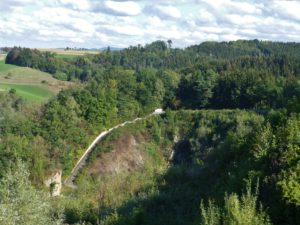
Wiener Graben quarry at the Concentration Camp.
Mauthausen had been one of the largest labour camps in the Third Reich. Between 1938 and 1945 about 200,000 people from all over Europe were imprisoned here and over half of those lost their lives.
Many of the prisoners were forced to work in the quarry, and carry huge granite rocks up the stairs you can see on the left of the photograph, now known as the “Stairs of Death”. Often, once at the top, the SS guards would tell them to throw the rocks off the cliff and go back down to get them. Other times, for no apparent reason, they would make prisoners push each other off the cliff. Those who were killed this way were cynically referred to by the SS as “parachutists”.
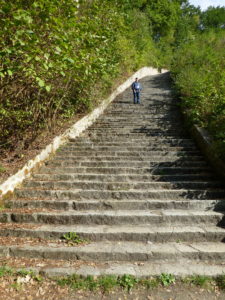
The steps out of the quarry.
There was a memorial at the base of the cliff in the quarry, to remember all those who were pushed to their death over the “parachute jump”.
The camp served the needs of the German war machine and also carried out extermination through labour. Prisoners were worked to exhaustion and under-nourished, so eventually they became too weak or ill and were then exterminated in one of a number of different ways.
We walked down into the quarry because I wanted to experience what it was like to walk back up those steps as a fit and healthy person, and I can tell you it wasn’t easy, so you can only imagine the struggle it was for a weakened and hungry prisoner!
The tour took us up through the memorial park, donated my various nations and victims’ groups, and on through the gate into the detention camp where the concentration camp inmates lived.
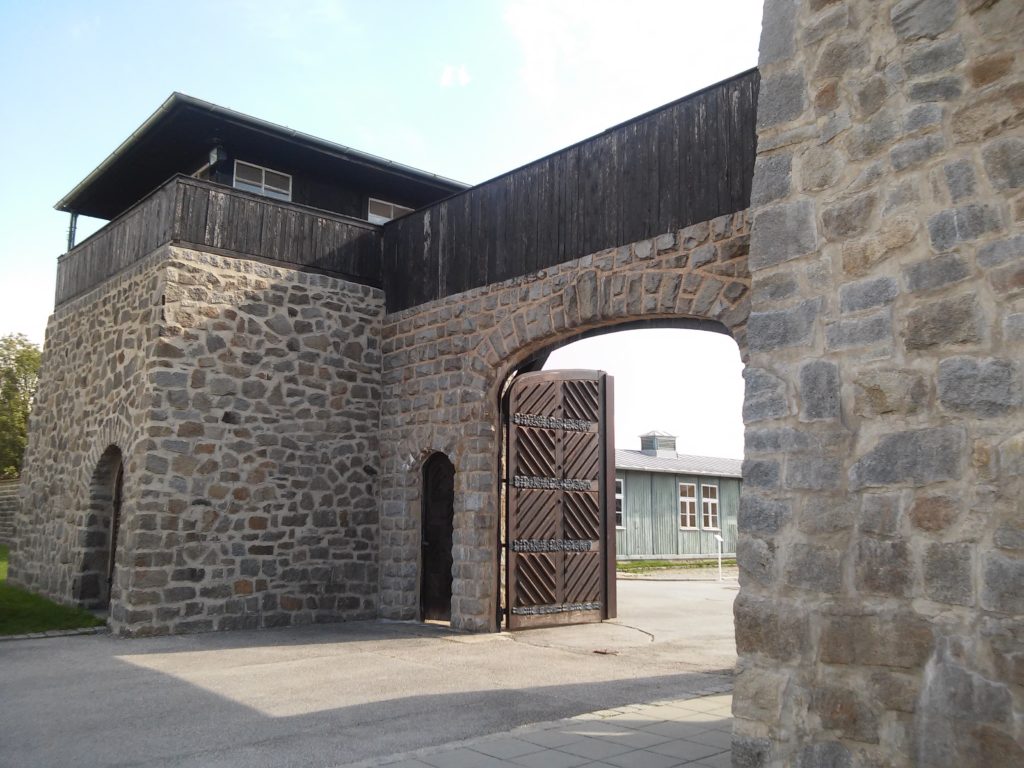
Gates to the detention camp.
Inside there were rows and rows of Barracks, only some of which are still standing. Each one was designed to house 300 inmates, but some housed up to 2,000.
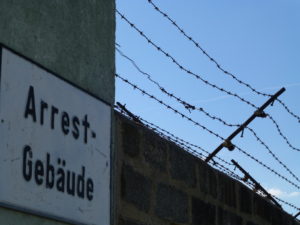
Arrest building and electrified barbed wire.
On the Audio tour we were told how the barbed wire fence had a 380 V charge and that many inmates died at the fence either by committing suicide or as a result of supposed escape attempts. Just beyond the fence at the back of the camp you could see a memorial to the Ash dump, where the ashes from the crematoriums were dumped. I was so deeply saddened to think how many victims remains are there.
I knew at some point we were sure to come across the Gas Chamber and crematoriums, but it still doesn’t prepare you for the sorrow and desolation you feel when you see them.
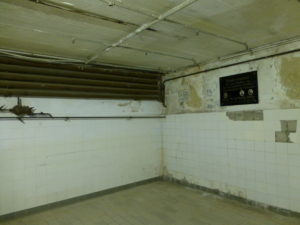
The Gas Chamber.
The Gas chamber seems like just a plain empty room, the only thing giving away it’s ghastly use are the pipes on the ceiling and the valves at regular intervals along them. At least 3,455 inmates were gassed with Zyklon B after March 1942.
Outside this room is a chilling autopsy room, where you can only imagine what when on!
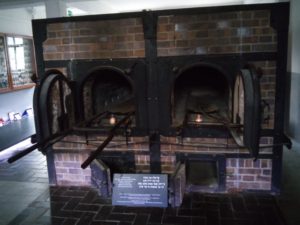
Crematoriums at Mauthausen.
The crematoriums were in the basement of the infirmary of the camp and were where the corpses of the concentration camp inmates were incinerated.
Two of the three ovens have survived and along the wall here are more memorials to those who died. The gas chamber was only one way the inmates were killed, they were also sometimes shot or hanged.
Since 2013 two floors of the infirmary building have housed two permanent exhibitions on the Camp’s history and the “Room of Names”, a room displaying all the names of those known by name who died in Mauthausen and Gusen concentration camps.
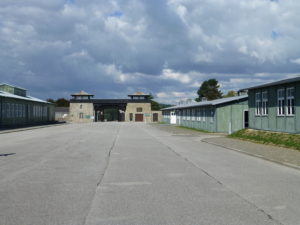
Roll-call area of camp.
The open area in the middle of the camp was the roll-call area, where the inmates were required to muster 2 or 3 times a day.
The camp had a mixture of inmates, not just Jews, but socialists, communists, homosexuals and other groups persecuted solely on religious grounds. After 1940 many Poles were placed here and then after the outbreak of the Sovient-German war in 1941, Sovient POW’s were kept here, but mostly in separate huts from the rest of the camp. It really was hard to take this all in while walking the grounds of the camp, I found myself overwhelmed with the horror of it all and how this could come to happen.
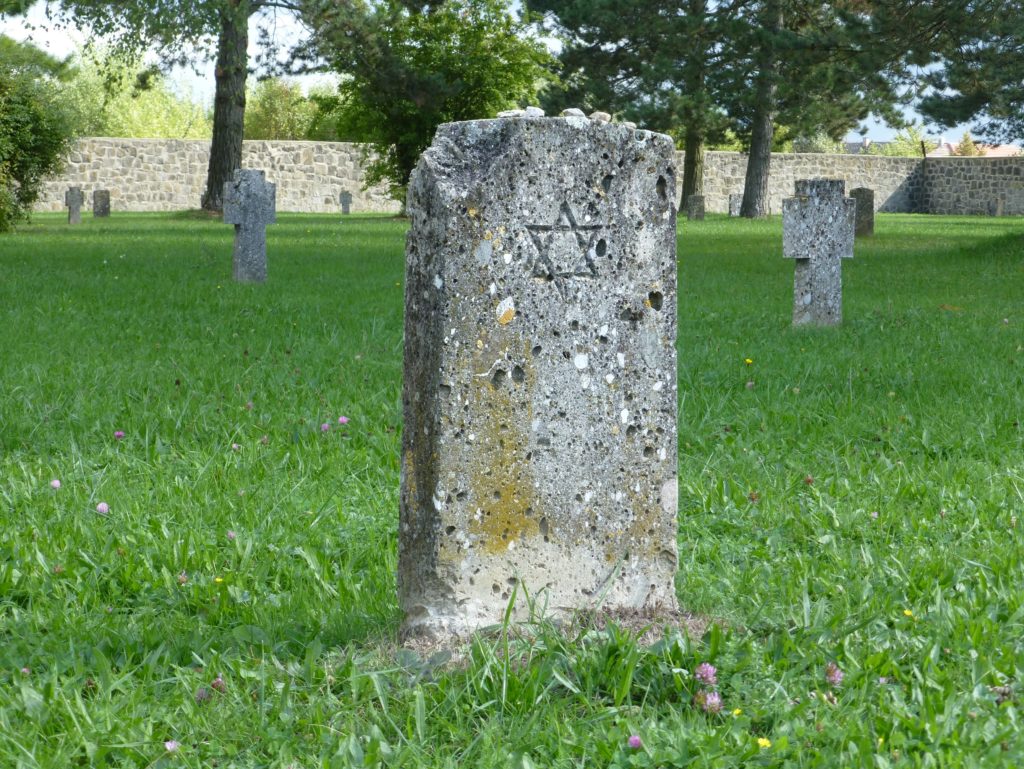
Graves. After the war some of the corpses were exhumed from the mass graves and buried here, where barracks used to stand.
We really could have spent longer soberly exploring the grounds of the concentration camp, but it was time for us to head back to meet our bus driver. The audio tour had been excellent, so informative and it really plunged you into how horrific life at the camp would have been.
To be honest, by now I was feeling emotionally drained, no words can adequately describe what happened at Mauthausen, so now all we can do is to honour those lost by remembering them, what happened to them, and never letting it happen again.
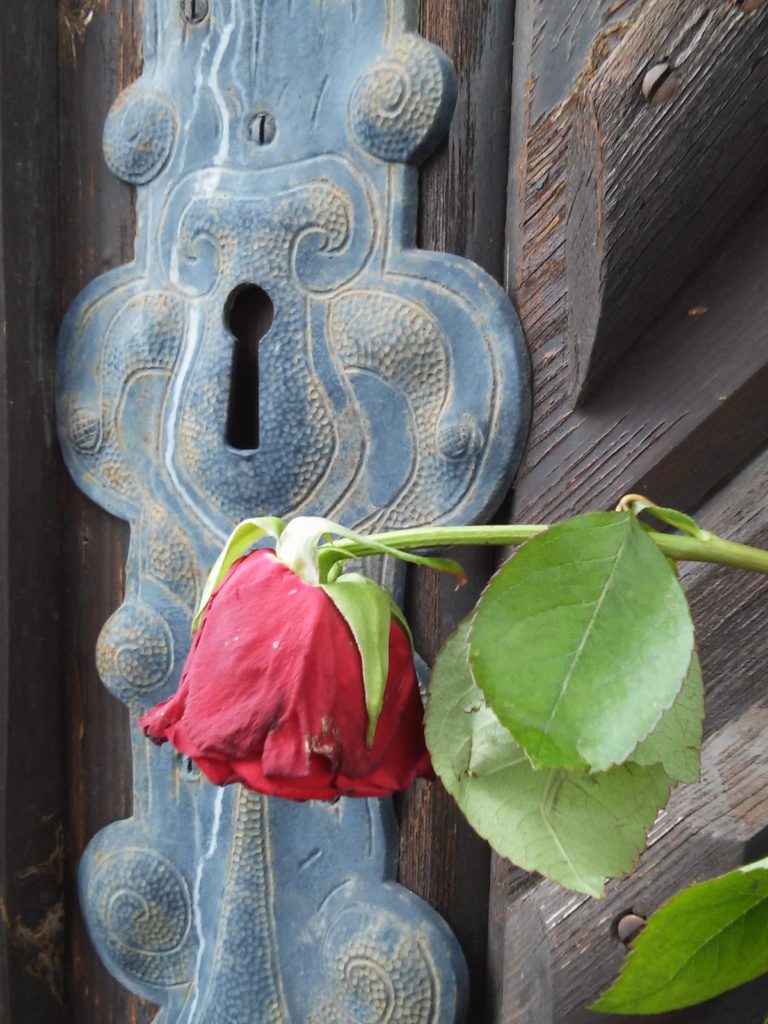
Floral memorial left on the gate at Mauthausen concentration camp.
Date of visit; October 2015.